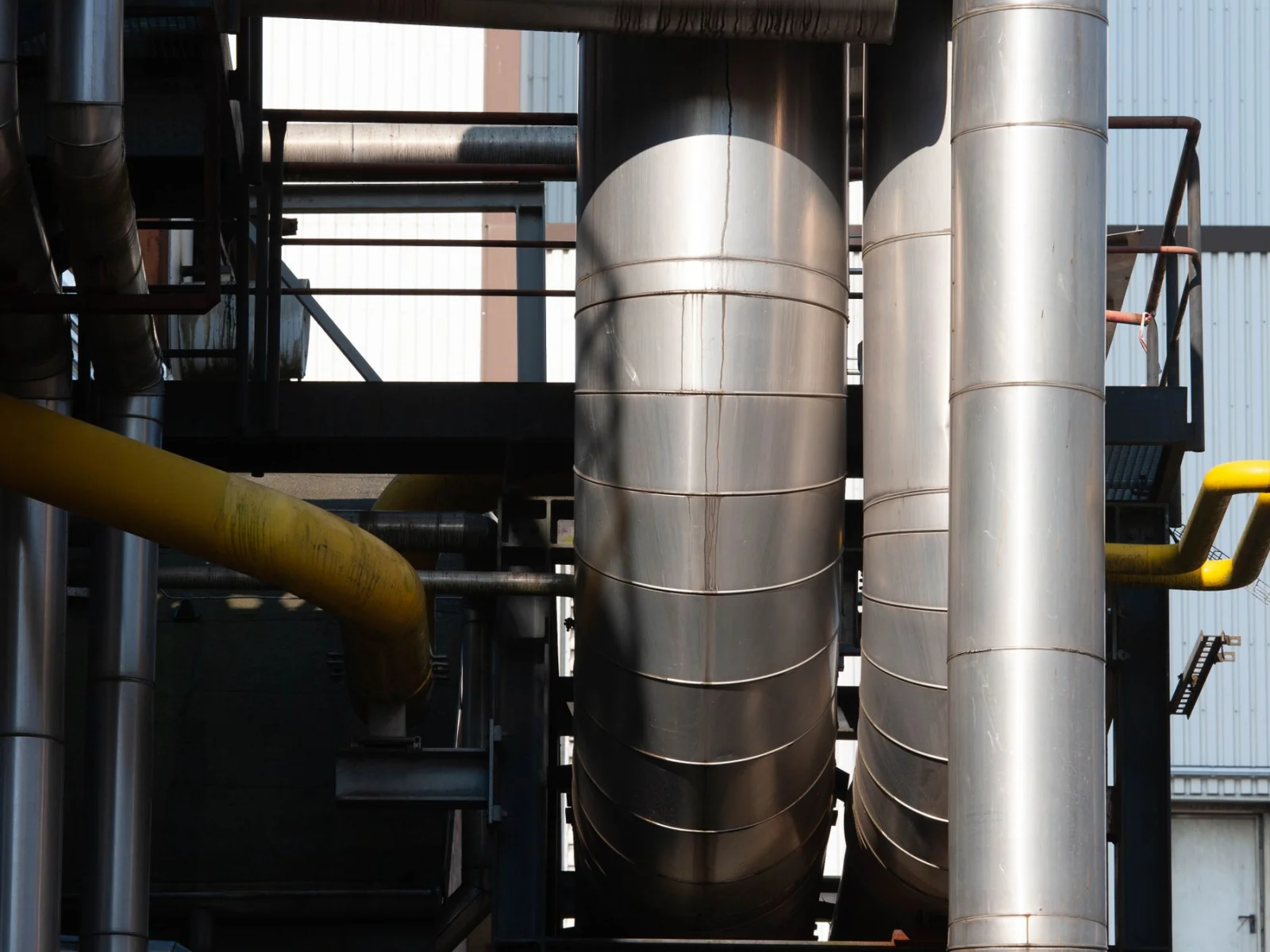
Hydrogen co-firing has moved from demonstration to specification. Across the Ansaldo Energia range the published capability now runs from 40 vol% on the AE94 and AE64 machines to 45 vol% on GT26 and 70 vol% on GT36 — and for a plant operator those numbers translate directly into parts and inspection planning.
What changes in the combustion system
Higher hydrogen fractions raise flame speed and flame temperature. Premix burners designed for natural gas see the flame anchor closer to the burner face, which shortens the life of burner tips, pilot assemblies and the first row of transition components. The practical consequence is not a redesign but a shorter replacement interval on a well-defined set of parts.
- Burner tips and pilot assemblies — the first items to show accelerated wear.
- Transition pieces and liners — higher metal temperatures at the same firing curve.
- First-stage nozzles — coating degradation tracks flame temperature closely.
Inspection intervals
Where a machine runs a sustained hydrogen fraction above roughly 20 vol%, borescope intervals on the combustion section are usually brought forward. The more useful planning tool is a running record of actual fuel composition rather than the design figure: many plants blend opportunistically, and accumulated hydrogen-hours matter more than the nameplate percentage.
What to send with an enquiry
For parts and inspection planning on a hydrogen-capable machine, the useful data set is the nameplate, the current fuel analysis, accumulated equivalent operating hours and the last borescope report. That is normally enough to confirm OEM equivalence, quote availability and propose an inspection scope in one pass.